
Boulder County Criminal Court Cases
Boulder County forms Colorado's 20th Judicial District. District Court hears felony prosecutions. County Court generally hears state misdemeanors and traffic matters. The clerk maintains the register of actions, public filings, orders, disposition, and sentence for each state case. The 20th Judicial District directory helps identify the assigned division before a request or courthouse visit.
City ordinance cases do not merge into that state docket. Boulder, Longmont, Lafayette, Louisville, Erie, and other municipal courts keep their own case files and bench warrants. Read the ticket heading and case number before choosing a clerk. A city citation may look like a county matter yet lead to a municipal counter. This venue check prevents a common failed search and keeps a request with the office that actually holds the file.
Boulder County Court Routing
The charge level and issuing authority determine the record route. A felony filed by the district attorney belongs in District Court. A state misdemeanor usually belongs in County Court. A municipal-code allegation stays with the issuing city's court. Federal prosecutions use the U.S. District Court for the District of Colorado and the PACER system, not the Boulder clerk.
| Matter | Record holder | Useful first clue |
|---|---|---|
| Colorado felony | 20th Judicial District Court | District Court case number |
| State misdemeanor or traffic | Boulder County Court | State citation or county case number |
| City ordinance | Named municipal court | Municipal ticket or city code |
| Federal criminal case | U.S. District Court | Federal docket number |
The court file begins with filed accusations, not merely an arrest. Charges listed at booking can change before filing. Use the court's complaint or information to see what the prosecutor actually pursued.
The 20th Judicial District directory is the official routing source.
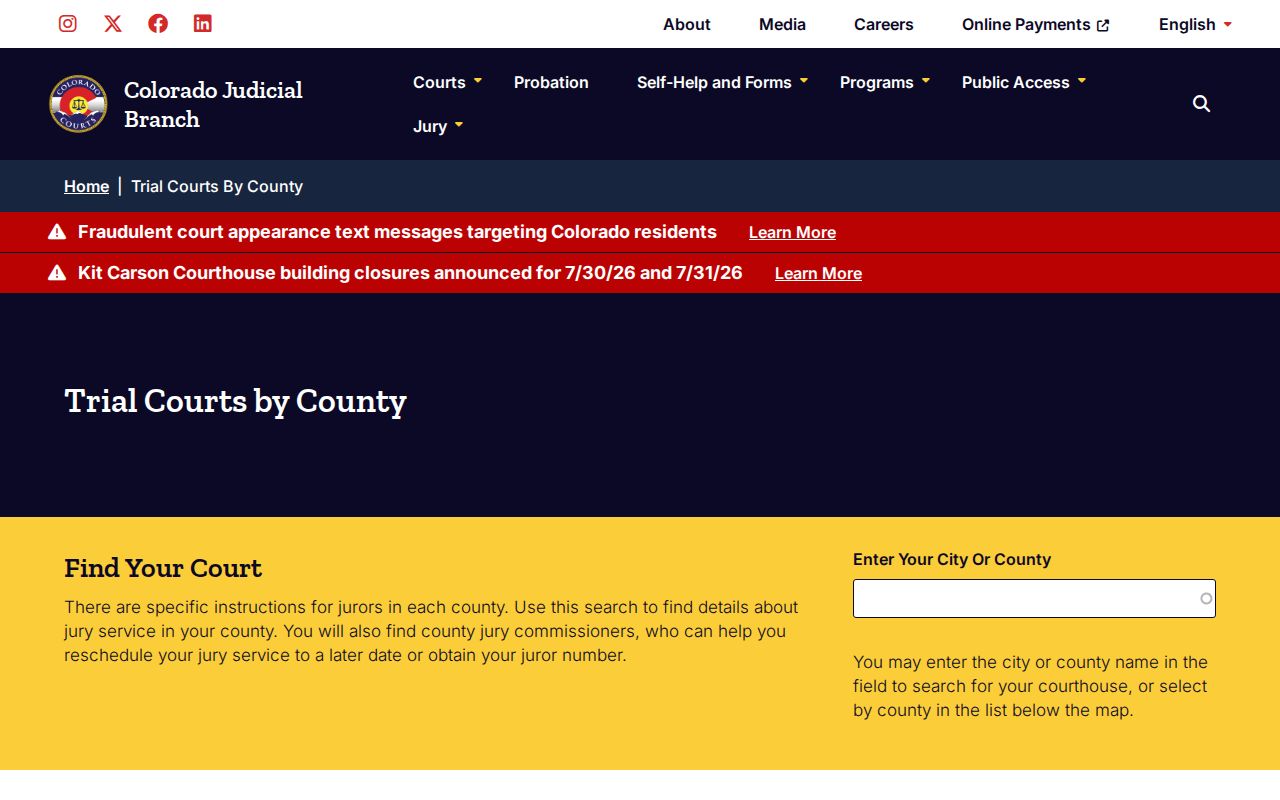
The directory helps connect a case to its court division before a copy request.
Searching Boulder County Case Records
Start with the Colorado Judicial Branch record-search guidance. Remote access may show docket data while the underlying document still requires a clerk request and payment. Case number is the strongest identifier. When it is unknown, give the party name, approximate filing year, charge, and expected venue. Older or non-digitized material may require staff research or an in-person counter search.
- Confirm whether the citation or charge belongs to state, municipal, or federal court.
- Search with the case number when available, or use the full name and likely filing year.
- Match the county, court, case type, and filing date before relying on a result.
- Read the register of actions for hearings, pleas, orders, and final disposition.
- Request the exact document or a certified copy from the clerk that owns the case.
| Field Label | Type | Required | Notes |
|---|---|---|---|
| Case number | Text | No | Best match for a known case |
| Party name | Text | No | Use the full legal name |
| County or court | Selection | No | Choose Boulder and the correct court |
| Filing year | Date or text | No | Helps separate similar names |
| Case type | Selection | No | Distinguishes criminal from other dockets |
The Judicial Branch access guidance explains public court-data access.
Remote docket data may still require a clerk request for the underlying filed document.
Boulder County Court Copies
The official Judicial Record and Document Request form offers a precise route when remote docket data is not enough. It accepts a case number, county, party and requester details, delivery information, and other matching facts. Criminal selections include the complaint or information, disposition or sentence order, protection order, ticket, and register of actions. Certification and exemplification are separate choices.
20th Judicial District Clerk
Boulder Justice Center
1777 6th Street
Boulder, CO 80302
20recordsrequest@judicial.state.co.us
Weekdays, 8 a.m. to 4 p.m.
Mail: P.O. Box 4249, Boulder, CO 80306
Published charges are $0.25 per page, $20 for each certified or exemplified document, and $5 for a name search. Off-site retrieval costs the actual amount. Research and redaction cost $30 per hour after the first hour. A party or attorney copy charge has a stated $15 cap, but that cap does not apply to a nonparty request.
The official request form shows the available document choices.
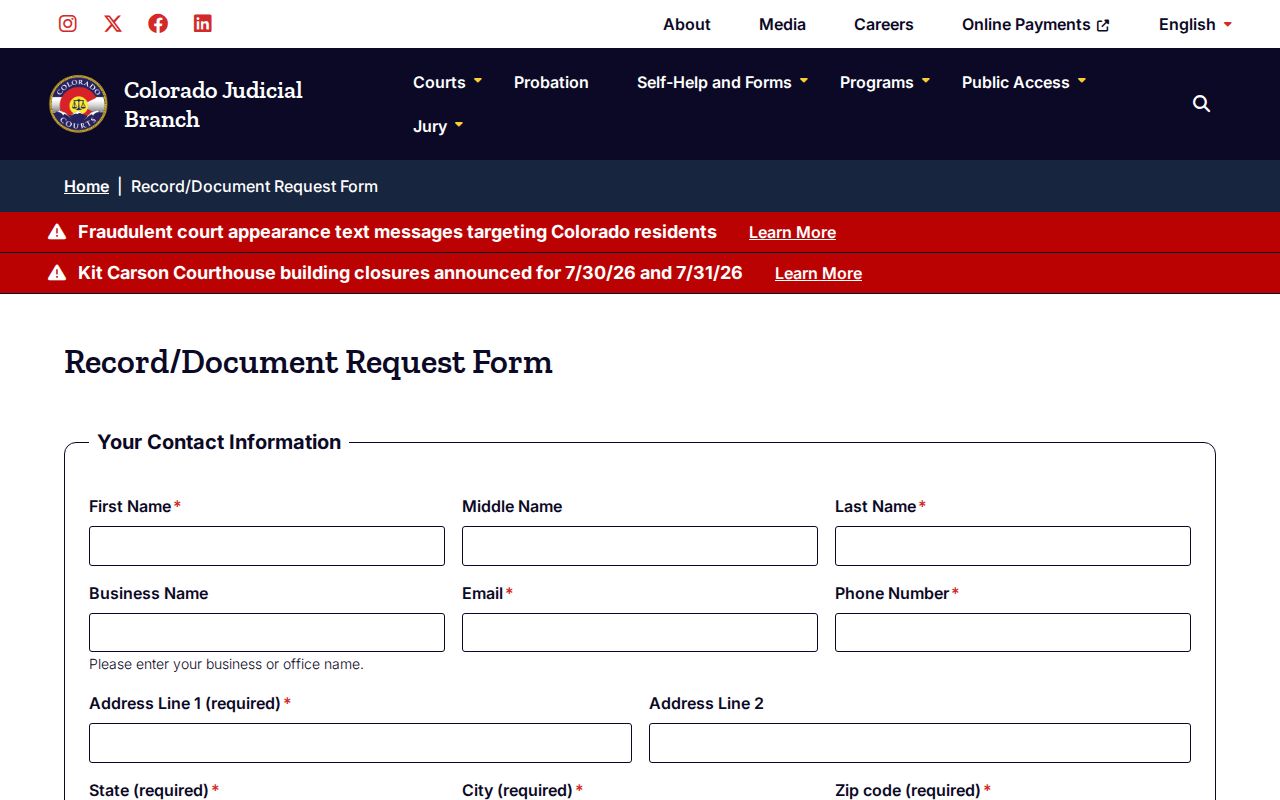
The form lets a requester name the exact case document and request certification.
Inside a Boulder County Case File
A court case file records the prosecution after filing. Its register of actions is a dated event list, sometimes called a docket. The charging document states the accusations placed before the court. Orders and minute entries show rulings and hearing activity. The disposition answers how each count ended, while the sentence order records the result after a conviction or qualifying plea.
| Case number and court | Identifies the venue, division, type, filing date, and status. |
|---|---|
| Charging document | Shows each filed count, offense description, statute, and level. |
| Docket entries | Lists filings, advisements, motions, pleas, orders, and hearings in time order. |
| Schedule | May give event type, date, time, courtroom, and judicial officer. |
| Disposition | States whether a count ended by plea, verdict, dismissal, or acquittal. |
| Sentence and finances | May show the sentence, restitution, fines, and payment status when public. |
Boulder County Docket Terms
Short docket labels can hide major differences. A dismissal means a charge ended without conviction. An acquittal is a not-guilty verdict. A deferred judgment postpones judgment while the person completes court conditions. The final entry must be read count by count because one case can contain several outcomes.
- Arraignment
- The formal stage for advisement and a plea.
- Disposition
- The final outcome assigned to a charge.
- Mittimus
- The sentencing or commitment document sent to the custody authority.
- Register of actions
- The court's chronological list of case events.
Financial entries do not always explain the whole sentence. Request the disposition and sentence order when the exact terms matter.
The Colorado Judicial forms catalog provides current court forms.
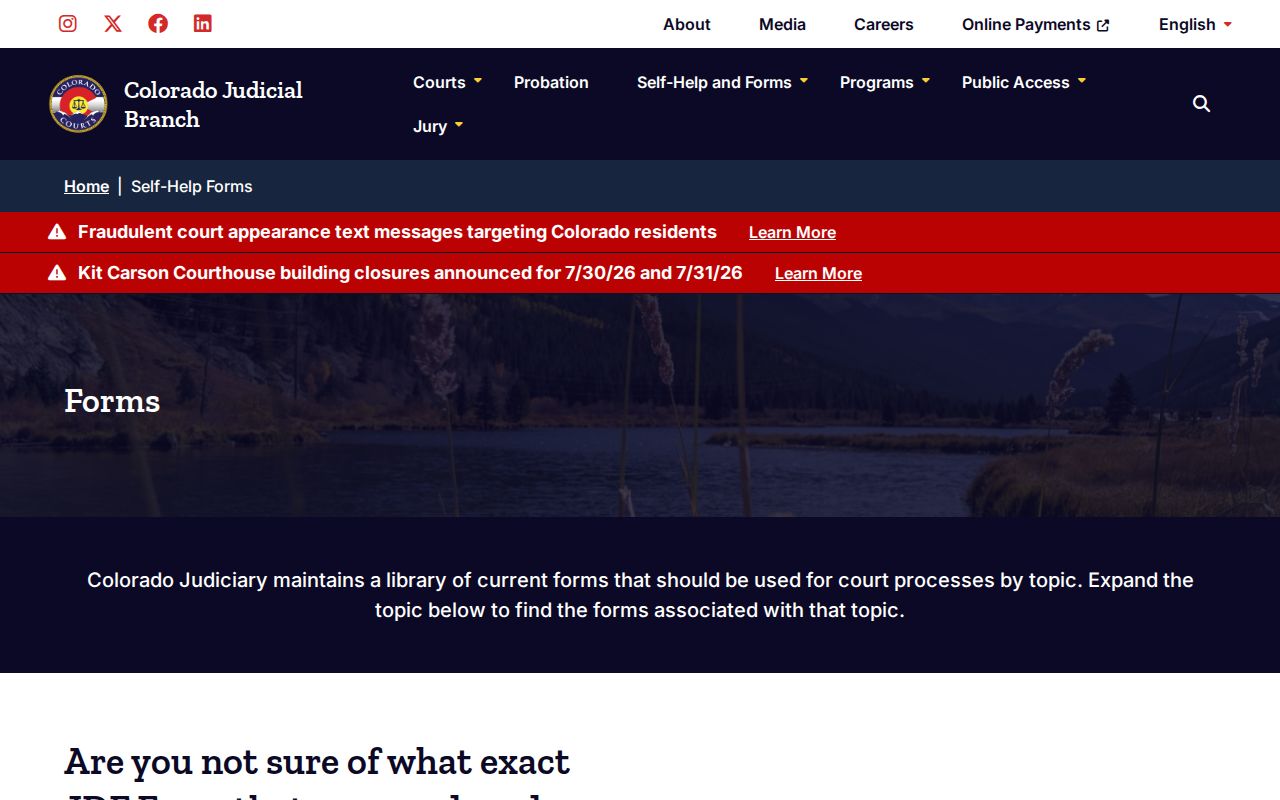
Using the current form matters because filing and sealing packets can change.
How a Criminal Case Moves
The case file does not always begin with a jail booking. A summons can produce a filed case without a fingerprint-supported arrest cycle. Once charges are filed, the court advises the defendant, sets events, hears motions, and records a plea or trial. The result is entered for each count. If guilt is established, the court then records sentence terms.
Case flow: Charges Filed › Arraignment › Pretrial › Plea or Trial › Disposition › Sentencing
Dates vary with the case and division. The docket schedule is the current source for a specific matter.
Federal cases use PACER rather than the Boulder County docket.
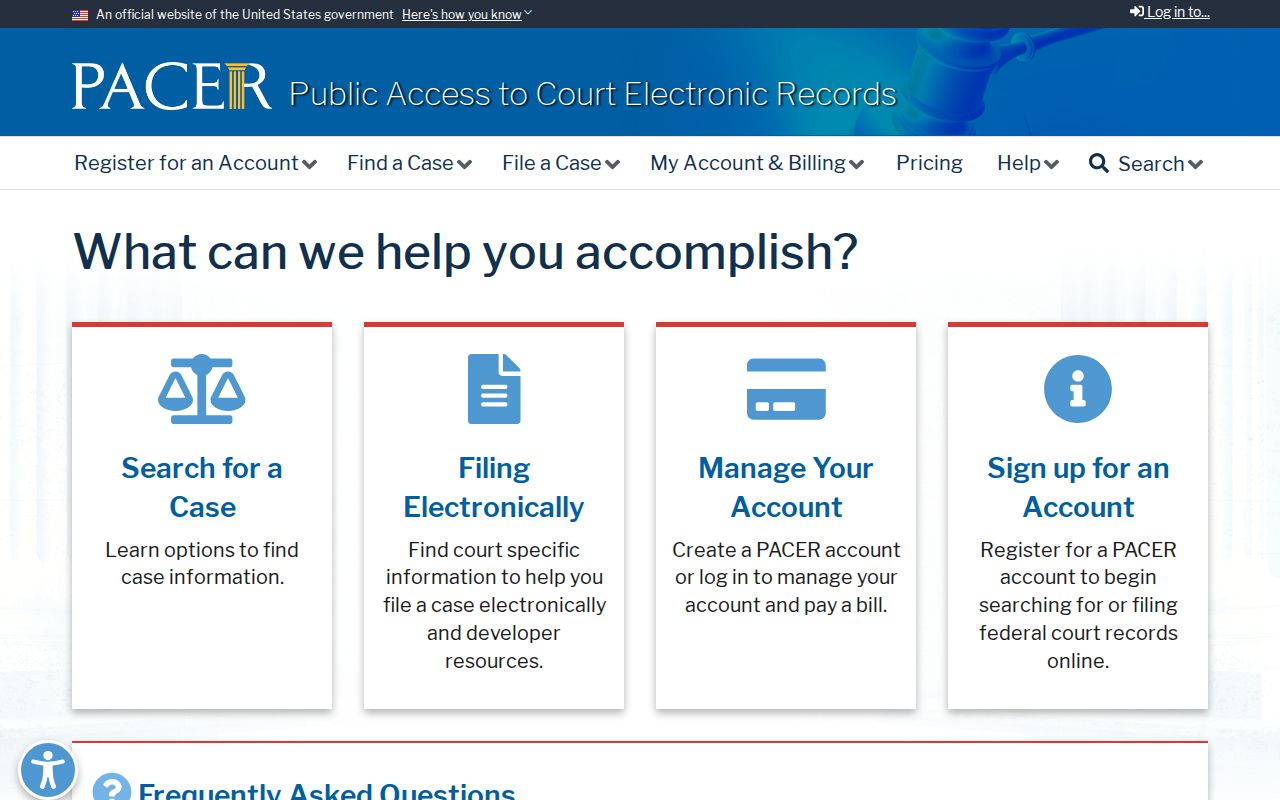
PACER is a separate federal case system and is not a Colorado criminal-history report.
When Boulder Records Do Not Match
A booking charge, court charge, and Colorado Bureau of Investigation entry can differ without any record being false. Police record the basis for arrest. Prosecutors decide what to file. Courts report the final outcome, and CBI must match that disposition to the fingerprint-supported arrest cycle. A summons case may exist in court with no matching arrest cycle.
For a missing or wrong outcome, obtain the court register and signed disposition first. Then use that material to ask the clerk or CBI to review the entry. The CBI records unit provides a challenge process for a person's own Colorado criminal history. Do not treat a portal mismatch as a new charge.
Case Record Access and Restrictions
Colorado court access follows Judicial Branch policy, including Chief Justice Directive 05-01. Public docket data can exclude protected identifiers, victim details, minor information, sealed cases, and documents restricted by law or court order. A document title may appear even when the document itself is not remotely available. The clerk can explain the request route but cannot release protected content merely because someone knows a case number.
If no result appears, check spelling, venue, and filing year. Then ask the correct clerk about older files or a public register of actions. A blank web result is not proof that no case exists. It can reflect municipal jurisdiction, an archive, a sealing order, or restricted remote access.
Boulder County Municipal Case Boundary
Boulder Municipal Court publishes a simple ticket clue: municipal tickets have a yellow back and show “Municipal,” while state and county tickets use blue text and show “State.” That small distinction can prevent a request from going to the wrong clerk. Longmont and Lafayette also maintain separate municipal dockets for their own code, traffic, and misdemeanor matters.
A municipal warrant remains with the issuing city court. A state bench warrant belongs to the 20th Judicial District route. When the ticket is unavailable, compare the alleged code, issuing agency, and case-number format, then call the likely clerk before paying for a search. The courthouse at 1777 6th Street does not absorb every city case merely because it sits in Boulder.
Municipal records can include discovery, transcript, sealing, review, and jury-demand filings that never enter the state portal. Boulder Municipal Court hears city traffic, parking, animal, photo-enforcement, and misdemeanor-code matters. Longmont offers separate docket and records searches. Lafayette is a court of record for its local cases. Ask each municipal clerk about its own copy fees and access limits.