
Checking Longmont Criminal History
A useful Longmont search starts by naming the record sought. A police narrative, a municipal docket, a jail booking, and a statewide criminal-history report answer different questions. The city maintains the first two. Boulder County and Colorado maintain the rest. Search your own name with enough detail to distinguish people who share it, and ask the custodian for an official copy when the result must be verified.
- Contact Longmont Public Safety Records for a local check, incident report, accident record, or address activity.
- Use the city court portal for a public docket or records search involving a Charter or Municipal Code case.
- Check the Boulder County jail listing when the event involved custodial arrest and transport.
- Use the 20th Judicial District channel if prosecutors filed a state misdemeanor or felony case.
- Request a Colorado name-based history from CBI when the question extends beyond Longmont.
The broader Boulder County criminal history overview explains county and state channels in depth. Longmont requests should stay with the city unless the record itself moved beyond city jurisdiction.
Longmont Police Department Records
The official Longmont Public Safety records page is the city source for police reports and local record products. Cash, check, and card payments are accepted. A card adds a 2.95% processing charge. Active investigations may be withheld when release could harm the case, so a valid request can produce a delayed or limited response rather than a full file.
The city CORA route sends arrest reports and body-camera requests back to Public Safety Records. That routing prevents a common error: a general city-record request is not the right channel for criminal-justice material held by police. Digital media has a separate process and telephone line because staff may need to review and redact audio or video before release.
The city explanation of police and fire reports illustrates the combined records model.
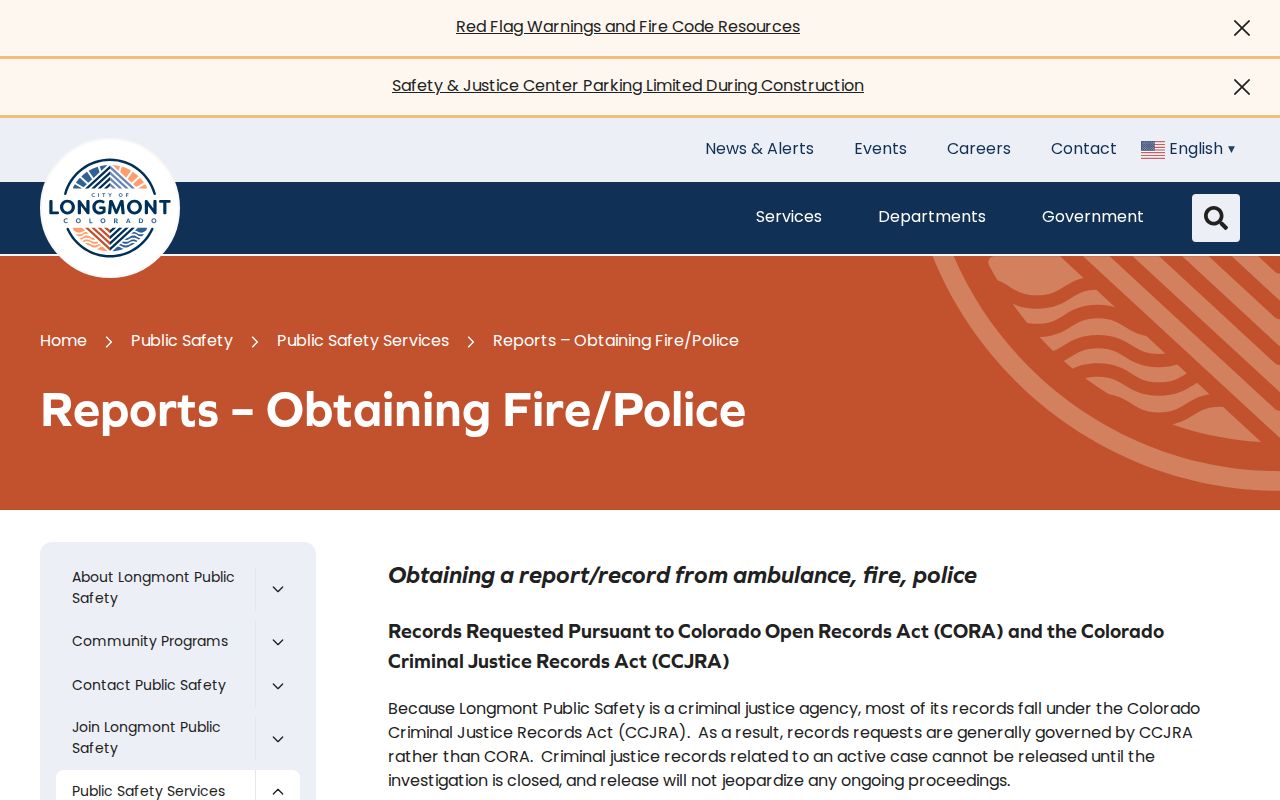
The image reinforces that Longmont residents use one records operation for several public-safety products, though each request still must identify the correct event.
Longmont Bodycam Request Routing
Arrest and body-worn-camera records do not belong in the ordinary city CORA queue. They are criminal-justice records, so Longmont directs them to Public Safety. Include a report number when known. Otherwise provide the involved name, date, location, and a clear description of the material. Narrow terms reduce the search and review work.
Online incident reporting serves a different purpose. For a qualifying event, a person may submit a report online and later receive an approved report number and an emailed copy. It does not let the public browse other people’s Longmont cases. Treat it as a way to create a report, not as a Longmont criminal records database.
Request route: Send arrest reports and body-camera requests to Public Safety Records, not the general city open-record portal.
Longmont Arrests and Bookings
Longmont has no separate public city jail roster. When police make a custodial arrest, the city report stays with Public Safety while the person enters the Boulder County Jail system. The official Daily Listing is the first place to look for current custody or a recent booking. Older booking material may require a Sheriff Records request.
A filing can create a third record. City-code matters remain in Longmont Municipal Court, but a state charge moves into the 20th Judicial District. The arrest narrative, jail entry, and court case can differ because each records a different stage. Charges may also change before prosecutors file the case.
For fuller county custody detail, use the site’s Boulder County arrest lookup. Do not treat an arrest as proof of guilt.
Longmont Bond Services Office
Community Justice Services maintains a Longmont bond-services office at 1035 Kimbark Street. Its number is 303-682-6854, and weekday hours are 8 a.m. to noon and 1 to 5 p.m. This is a county service in Longmont, not the city police records counter or Municipal Court clerk.
The office helps explain why one event can touch several Kimbark addresses and still produce records held by separate custodians. Public Safety owns the city incident report. Jail staff own the booking entry. Court clerks maintain the filed docket. Bond-service activity belongs to Community Justice Services.
Municipal Court Records in Longmont
Longmont Municipal Court has limited jurisdiction over Charter and Municipal Code violations. It operates at the Safety & Justice Center, 225 Kimbark Street, with a clerk line at 303-774-4804. The counter is open weekdays from 8 a.m. to 5 p.m. State-law felonies and county misdemeanors do not become Longmont municipal cases.
| Court Name | Longmont Municipal Court |
|---|---|
| Case Types Heard | Charter and Municipal Code violations, including city traffic and local offenses |
| Case Lookup Channel | Public Docket Search and Records Search, clerk assistance, or a portal invitation for detailed access |
| What the Docket Shows | Proceeding, day, time, courtroom, docket or citation, filings, and case status where public |
| Copies & Access | File Retrieval and File Submission tools are available; protected juvenile material may not be readily visible |
Online payment has legal effect. Paying a municipal ticket online enters a guilty plea and points are assessed. Partial payment is allowed only with court authorization, and cash should never be mailed.
Longmont Docket Search Boundaries
The city links to Municipal Record Search for Docket Search, Records Search, File Retrieval, and File Submission. Public search is not the same as detailed e-filing access. A blank result may mean the matter is outside municipal jurisdiction, protected, not yet indexed, or available only through the clerk.
Attorneys request an invitation at court@longmontcolorado.gov. A self-represented party emails a name, docket or citation number, and relevant information. The court says an invitation normally arrives within 48 business hours. A parent or guardian uses a similar route for a juvenile. Juvenile records may not be readily viewable to the public.
- Docket Search
- A public view of scheduled or indexed city cases.
- File Retrieval
- A portal tool for obtaining material tied to an authorized case.
- E-filing
- Registered access for submitting and viewing case material, with broader functions than public search.
Longmont Ticket Payment Consequences
A Longmont municipal ticket can look like a bill, but online payment is also a court action. The city states that payment enters a guilty plea and causes points to be assessed. A person who disputes the charge or does not understand the effect should review the docket and contact Municipal Court before paying. The public schedule identifies the proceeding, day, time, and courtroom, which helps a cited person confirm the next required event.
Partial payment is not an automatic option. Longmont accepts it only when the court has authorized the arrangement. Cash should never be sent through the mail. These limits belong to the municipal case, not to a Public Safety report request or Boulder County bond. Keeping those payments separate prevents a records fee from being confused with a fine, bond, or plea.
A portal invitation can help a self-represented person see detailed case material, but it does not extend the response date on a ticket. Use the citation and current Longmont docket to track the case while waiting for access.
Where Longmont Records Go
A police event does not merge into one universal file. Longmont Public Safety retains the incident narrative. If custody follows, Boulder County Jail creates the booking record. A city-code prosecution appears in Municipal Court. A state prosecution appears in the 20th Judicial District, and reportable arrest and disposition data can later reach the Colorado Bureau of Investigation.
Record flow: Longmont Police › Boulder County Jail or Courts › Colorado Bureau of Investigation
Recent activity is most likely at the city or jail level. A completed statewide history depends on data sent to CBI and can omit a ticket, summons, or disposition that was not matched to the arrest cycle.
Longmont Police Records Since 1899
Longmont’s record history reaches back to a marshal’s 1899 reports. The ledger counted intoxication, disturbances, indecent exposure, horses running in streets, and “fast driving,” likely involving a horse and buggy. The terms feel remote, yet the core records task remains familiar: officials logged events, acts, and outcomes for later reference.
Modern Public Safety Records combines digital police, fire, accident, medical, and address-activity material. The official Longmont Public Safety page shows the department behind that unified system.
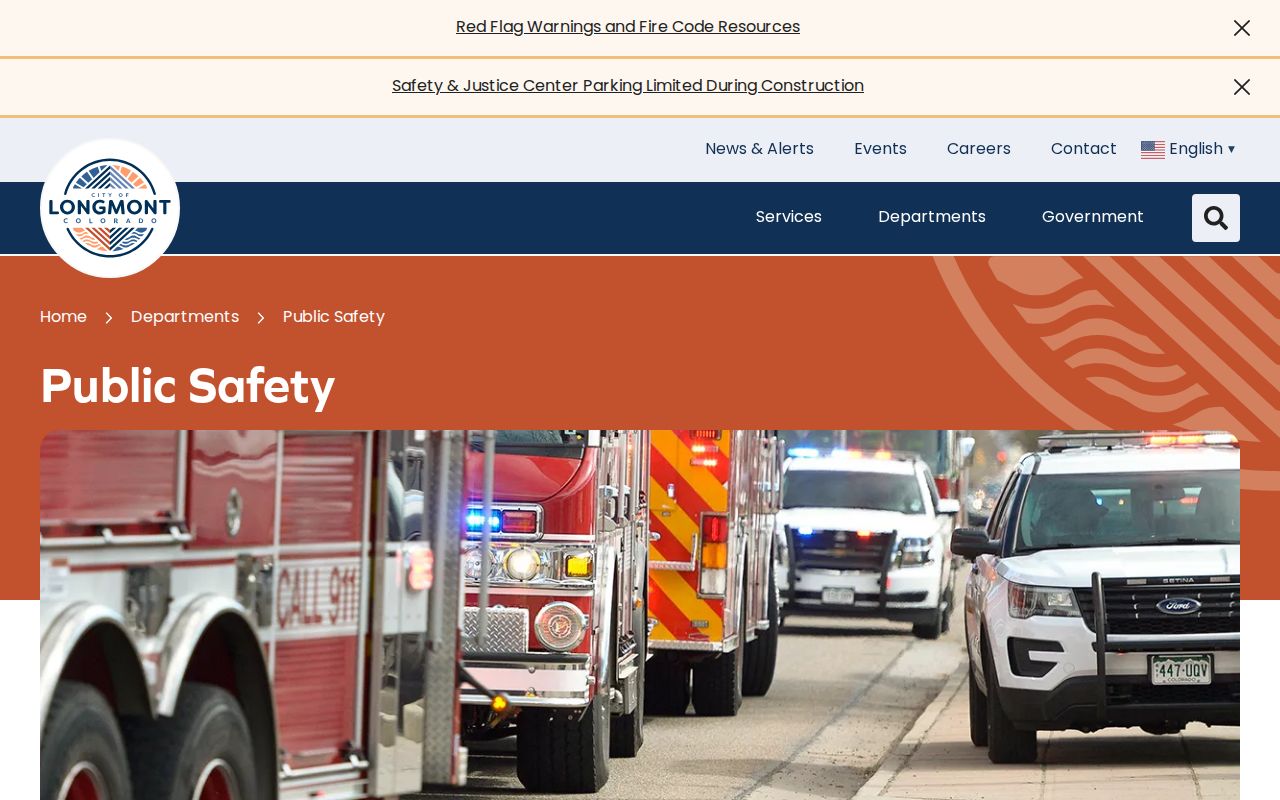
The modern department’s shared structure is the clearest contrast with Longmont’s early paper ledgers and a key reason to use its specific records counter today.
Public Access Rules in Longmont
Colorado separates ordinary city records from criminal-justice records. The Colorado Open Records Act governs many administrative documents. Police reports, arrest material, and body-camera records fall under the Colorado Criminal Justice Records Act. That law allows inspection of public criminal-justice records but also permits withholding or redaction when disclosure would harm an investigation, invade protected privacy, expose confidential sources, or conflict with another law.
A request can itself become a public record, and identity information may be needed to confirm eligibility for protected material. Longmont’s instruction to call first also helps avoid paying for the wrong product. A denial or redaction should identify the basis well enough for the requester to understand the limit.
Key Statutes:
Colorado Open Records Act, C.R.S. §§ 24-72-200.1 through 24-72-205 governs access to many city administrative records.
Colorado Criminal Justice Records Act, C.R.S. §§ 24-72-301 through 24-72-309 governs police and other criminal-justice files.
C.R.S. § 24-72-305.5 restricts use of criminal-justice records for direct commercial solicitation for financial gain.
Note: Active-investigation limits can change over time, so ask Public Safety Records whether a previously withheld Longmont file has become releasable.